
How to Get Rid of Old Appliances: A Complete, Responsible Guide
February 11, 2026
Getting rid of old appliances sounds straightforward—until you try to move a 200-pound refrigerator, a bulky washer, or a hardwired dishwasher. Many trash services won’t accept appliances with regular pickup, some cities require special scheduling, and certain items (like fridges and AC units) may need extra handling because of refrigerants. If you’ve been searching “how to get rid of appliances” or “appliance disposal near me,” you’re not alone—this is one of the most common home cleanout headaches.
This guide walks you through the most practical, responsible ways to dispose of appliances, in a logical order: first, figure out what you have; second, choose the best disposal method; third, prep for pickup or drop-off. You’ll also see where professional appliance removal fits in when you need speed, convenience, or help with heavy lifting.
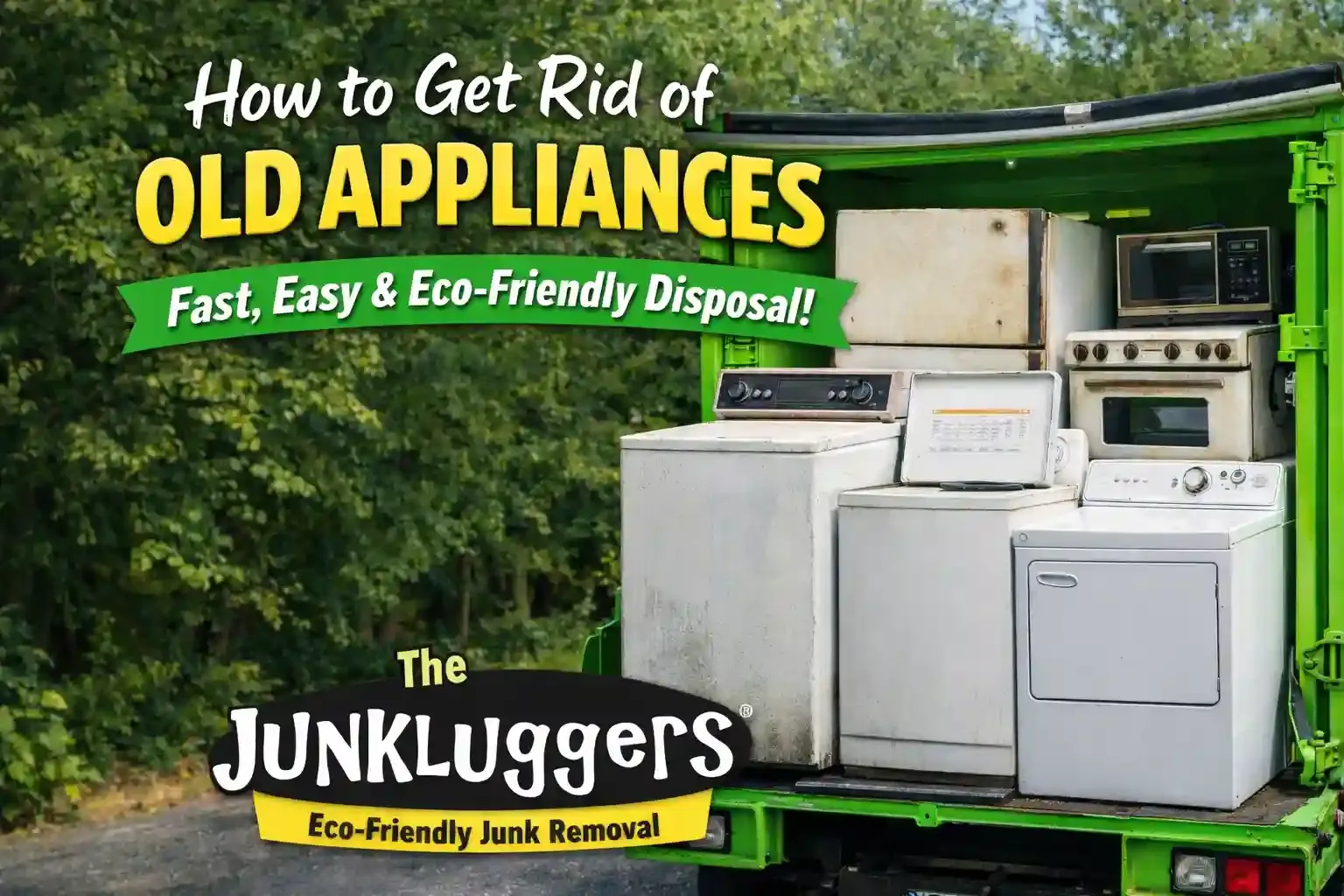
Step 1: Identify the Appliance (Because Disposal Rules Vary)
Not every appliance is treated the same. A toaster oven can go with e-waste programs in many areas, but a refrigerator usually can’t go out with standard trash. Start by identifying what you’re disposing of and whether it might require special handling.
Most appliance disposal methods fall into two groups:
- Large appliances: refrigerators, freezers, washers, dryers, dishwashers, ovens, stoves/ranges, water heaters
- Special appliances: window AC units, dehumidifiers, and anything that may contain refrigerant
If you’re unsure whether an item contains refrigerant, look for a label on the back, inside the unit, or near the compressor area. When refrigerants are involved, your best approach is usually a licensed program, approved recycler, retailer take-back, or professional removal—not curb trash.
Step 2: Decide Whether Your Appliance Can Be Reused
The biggest question is simple: Is it still usable? If it works and is safe, you can often donate, sell, or give it away. If it’s broken, unsafe, or too old to be efficient, recycling is usually the best end-of-life option.
An appliance is typically a good candidate for reuse if it:
- Powers on and runs properly
- Has intact doors, cords, knobs, and key parts
- Doesn’t have heavy rust, mold, or strong odors
- Is reasonably clean and safe to transport
An appliance is usually better for recycling/disposal if it:
- Has major rust or water damage
- Smells strongly (especially old refrigerators/freezers)
- Is missing essential parts
- Has electrical issues or is unsafe to operate
This quick decision helps you avoid the most common frustration: trying to donate an item that gets rejected after you’ve already loaded it up.
Step 3: Choose the Best Appliance Disposal Method
Below are the most common ways to get rid of appliances, organized by the scenario you’re most likely in.
If You’re Replacing an Appliance: Use Retailer Haul-Away (When Available)
If you’re buying a new refrigerator, washer, dryer, or range, many retailers offer haul-away when they deliver the replacement. It’s convenient because you don’t need to move the old unit yourself, and it’s tied to an appointment you already have.
Before you rely on this option, ask two quick questions:
- Do they remove from inside your home or only from curb/garage?
- What happens to the old appliance—recycled, donated, or disposed?
Retailer haul-away is often the easiest path when timing lines up with delivery day.
If Your City Offers It: Schedule Municipal Bulk Pickup or Special Collection
Many cities and waste haulers offer bulky-item pickup for large appliances, often by appointment. Some include a limited number of pickups per year; others charge a fee. Rules vary widely—especially for refrigerators and freezers—so it’s worth checking local instructions before you drag anything outside.
Municipal pickup works best when:
- You can wait for the next pickup window
- You can safely move the appliance to the designated set-out location
- The city/hauler confirms your specific appliance type is accepted
Where it breaks down is stairs, tight hallways, or heavy lifting. If the rule is “curb only,” you’ll still need a plan to get it there safely.
If It’s Newer and Works Well: Sell It
Selling is most successful when the appliance is newer, energy-efficient, and in good condition. Marketplace platforms can work well, but selling takes coordination: messaging, scheduling, and pickup logistics.
A listing that moves quickly usually includes:
- Brand, model, and approximate age
- Clear photos from multiple angles
- Notes about condition (“runs great,” “minor cosmetic scratches,” etc.)
- Pickup details (stairs, narrow doorway, curb access)
If you’d rather not manage pickup or you need a guaranteed removal date, a pickup-based option is often easier.
Step 4: Prep Your Appliance So Removal Goes Smoothly
No matter which disposal method you choose, a little prep can save time and prevent damage.
For most appliances:
- Unplug and clear contents
- Remove loose shelves/trays and tape doors shut if needed
- Clear a pathway through hallways and doorways
For washers/dishwashers:
- Disconnect hoses and drain water to avoid leaks
- Place a towel or tray under the connection points during disconnection
For refrigerators/freezers:
-
Empty, defrost, and dry the interior to prevent odor and dripping
For gas or hardwired appliances:
-
Don’t guess—use a qualified professional for safe disconnection if you’re not sure
This is also where many people realize the real obstacle isn’t “where can I dispose of appliances?”—it’s “how do I get it out of my house safely?”
When Professional Appliance Removal Makes Sense
At this point, you’ve probably identified the best disposal route—but you may still be stuck on the hardest part: moving it. If you don’t have a truck, can’t lift safely, or need multiple items removed at once, professional appliance removal becomes the most practical option.
The Junkluggers can help when:
- Your appliance is in a basement, upstairs, or tight space
- You’re removing multiple appliances or combining items (appliances + furniture + clutter)
- You need a reliable pickup date instead of waiting for municipal scheduling
- You want a service that prioritizes responsible sorting whenever possible
Many people use The Junkluggers specifically to avoid the hidden costs of DIY disposal—time, rental vehicles, injury risk, and the uncertainty of who will actually accept the appliance once you arrive.
If you want the simplest path, you can find the nearest Junkluggers location and schedule appliance removal with a local team that can explain what they can take and what to expect on pickup day.
Final Takeaway: The “Best” Option Is the One You’ll Actually Follow Through On
Appliance disposal is less about a perfect plan and more about a realistic one. If you have the time, equipment, and help, recycling or drop-off options can work well. If your appliance is in great shape, reuse through donation or resale keeps it in service longer. But if the obstacle is heavy lifting, transport, or finding an approved disposal route, The Junkluggers can make it simple—we’ll pick up your old appliance, haul it away, and prioritize responsible sorting whenever possible.
Ready to clear the space? Find your nearest Junkluggers location and schedule appliance removal today so you can get it done without the stress (or the sore back).