
Kids’ Storage Ideas & Where to Donate Items
Updated: October 19, 2026
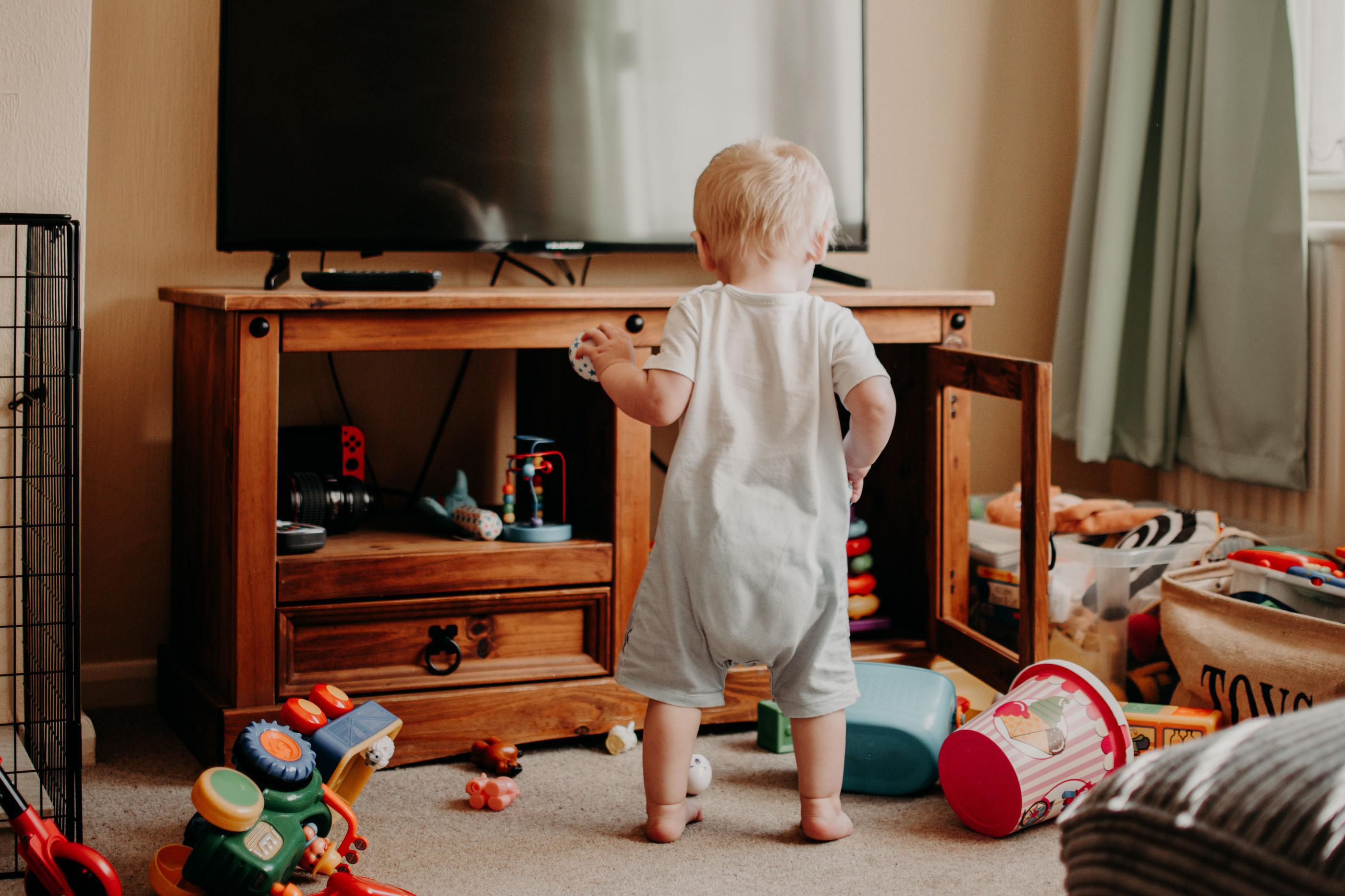
Kids come with a lot of baggage. Whether it’s toys, books, craft supplies, sports equipment, clothes, or school papers, keeping all their stuff organized and controlling the clutter may seem impossible. If you’ve ever muttered “our kids have too much stuff” while stepping on a rogue Lego or wearily typed “kids too much stuff” into a search bar at 1:00 in the morning, this guide is for you.
Toy storage and kids’ clothing organization is challenging. While there’s no shortage of inspiration (we’re looking at you, Pinterest), many of the ideas seem best for people with a big budget and lots of square footage. We’re here to tell you that it’s possible to declutter with kids without having a designated playroom or massive closets. And you don’t need to spend a fortune on storage solutions.
We’ve put together this list of easy and affordable DIY storage ideas to help corral your kids’ clutter, plus our top tips for donating, recycling, and disposing of the items your kids no longer need like toys, clothes, cribs, car seats, and even larger items such as bunk beds.
Photo: Lisa Fotios
How Do You Start Organizing and Decluttering Your Kids’ Stuff?
Decluttering your home requires creativity and intention. A former teacher, mom of 3, and creator of the Busy Toddler blog, Susie, offers tried-and-true advice to follow as you start organizing your kids’ stuff.
Here are her top tips to keep in mind as you start decluttering your kids’ toys or clothes:
- Keep actively used toys visible by getting rid of boxes that take up space and hide toys.
- Minimize visible toys, since too many toys can be overwhelming. Store some toys away, rotate them periodically, and donate items that they’ve outgrown or don’t play with.
- Every toy or item must have a home. It goes back to its home after playtime.
When kids have too much junk for any bin system to handle, the answer usually isn’t buying more bins. It’s having fewer things. We’ll cover exactly what to do with the overflow later in this article.
12 DIY Toy Storage and Kids’ Clothing Organization ideas
We’re big fans of using items you may already have in your home to organize toys, craft supplies, artwork, dress-up clothes, or other kids’ stuff. Here are some of our favorite DIY kids’ storage, organization, and decluttering ideas.
These favorites that organizing toys on a budget is completely doable.
-
Use mason jars for hair accessories, craft supplies, tiny toys, and more
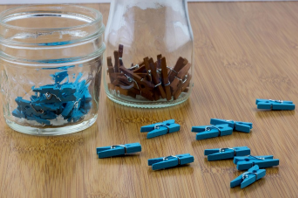
Get organized and make the most of your mason jars!
These cute little jars can be used for much more than storing food. They are perfect for holding toothbrushes and toothpaste, hairbrushes, ponytail holders, markers, pencils, and more. Use a sharpie to label or personalize them with each child’s name.
If you have young kids and are worried about using glass jars, these plastic craft jars are a perfect non-glass alternative.
-
Use over-the-door shoe organizers for small toys, stuffed animals, craft supplies, and shoes
Over-the-door shoe organizers make the perfect place to store little toys. Keep Legos organized and away from your feet (ouch!), and keep Barbie dolls or action figures organized and easy to find by placing them inside the shoe pockets.
-
Use bungee cords to wrangle stuffed animals
A few stuffed animals can quickly turn into a whole zoo. Keep your kids’ bedroom or playroom from getting too wild with a fun DIY stuffed animal storage solution. Start by building a frame from scrap wood or PVC pipes, and then attach bungee cords to hold your kids’ plush pals.
-
Repurpose shoeboxes
Instead of throwing out your empty shoeboxes, repurpose them. They are perfect for creating a memory box or storing crayons, craft supplies, matchbox cars or other small toys. Let your kids decorate the boxes with fun wrapping paper or stickers.
Don’t forget to label the boxes, so you know exactly what’s in them without opening them up! Use a picture to show what’s inside the box for toddlers or kids who can’t read.
-
Save artwork with a digital storage app
Instead of keeping all those pictures and paintings, preserve them for eternity using your smartphone. If you have multiple kids over multiple years, you’ll quickly acquire many papers and clutter. But if you store their items in the Cloud, your room is limitless! There are many apps to store your kids’ artwork, but some popular picks include Keepy, ArtKive, Canvsly, Artsonia, and Artbook.
If you want to be able to flip through your kids’ artwork or share it with friends and family, take photos of their drawings or crafts and make an album for each school year; this will keep papers organized, prevent fading, and keep them safe from being crushed or torn.
-
Use mesh bags to hold tiny toys, puzzles, or game pieces
You can store pretty much anything in a mesh bag. An entire collection of Army men? No problem, they fit into a mesh bag. Mr. Potato Head and all his facial features? They fit in there, too! Mesh storage bags are affordable and come in lots of colors and designs.
-
Turn old cardboard boxes into fun storage
You can create fun and functional storage for stuffed animals or dress-up clothes with recycled cardboard boxes, glue, scissors, and a little paint. We love this cardboard car storage from Handmade Charlotte.
If you have a kiddo who likes to dress up, take a large cardboard box, paint it, add a curtain rod, and your child will have a closet to store and find their favorite costumes easily.
If you’re feeling adventurous, you can use cardboard boxes to create a cube storage shelf and add bins to store toys in a bedroom or playroom.
-
Put school papers in filing bins or baskets
Papers, papers, everywhere. Bins and boxes filled with collections of artwork and paperwork begin in preschool and don’t end until they leave for college. While some of the papers you’ll want to save and others are needed for studying, you’ll need to recycle or toss many more. If you decide to save, store them in filing bins or baskets designated for each child.
-
Create a neat workspace or craft corner with simple wall storage
To keep your kids’ desk surface clear or art supplies within reach, hang a small rod on the wall and use hooks to hang cups to store pens, pencils, scissors, and other supplies.
-
Utilize the space under your kids’ beds
Unused space underneath beds is a great place to store items that aren’t used often or are bulky. There are varying sizes of bins that fit perfectly beneath beds. It’s a perfect place to put clothing and toys, especially in smaller living spaces lacking storage.
For older children and teens who use electronic devices, designated charging stations reduce the clutter because it keeps all their devices in one place. Keep their video games and board games in bins underneath their beds.
-
Add baskets or cubbies near the front door for coats and backpacks
What about all those shoes, jackets, and backpacks that get tossed by the front door the minute your kids walk into the house? One way to declutter the front entry (or back room) from school stuff is, if there’s room, to add a coat hook to the wall and a bench with shoe storage. It’s a perfect solution to contain the things used daily.
-
Declutter first so organizing is easier
The Junkluggers’ local pros make it easy to declutter your home!
One of the best ways to keep the kids’ clutter to a minimum is by sorting through toys and clothes a few times a year and letting go of things that are broken, stained, outgrown, or no longer loved. Fewer items means every storage idea above works better. Not sure where it should all go? Well… that’s exactly what the rest of this guide is for.
What to Do with the Kids’ Items They’ve Outgrown
Sort everything into three piles: donate, recycle, and toss. Gently used items in working condition go in the donation pile. Broken, stained, expired, or recalled items go to recycling or the trash, depending on the material. When you’re done sorting, use the guides below for the trickiest kid-item categories.
Short on time? The Junkluggers will haul the whole lot at once, donating what’s usable to our local charity partners and recycling what isn’t. You’ll even receive a donation receipt for tax time. Book online to skip the rest of this guide (and the hard work) entirely.
Where Can You Donate Used Toys?
Donating toys is the happiest outcome for the toy box overflow, and there are more takers than you might expect. Non-profit resale shops, children’s hospitals and shelters, daycare centers, churches, and Buy Nothing groups all welcome gently used toys. Some national programs, like Toys for Tots, focus on new toys, so check each organization’s guidelines first. Everywhere you donate to kids in need, the same rules apply: The toys should be clean, complete, and working. Wipe them down, check for missing pieces, and pop in fresh batteries where needed.
Electronic toys that no longer work shouldn’t go in the trash. Anything with a circuit board or battery belongs in e-waste recycling instead.
Donating Children’s Clothes
Kids grow out of clothes faster than you fold them, which makes donating children’s clothes one of the easiest decluttering wins in the house. If you’re wondering where to donate kids’ clothes, start with local family shelters, foster care closets, church clothing drives, and non-profit resale shops. Online consignment platforms are another option for name-brand items in great shape. Wash everything first, skip anything that is stained or torn (textile recycling exists for those), and bundle clothes by size to make a volunteer’s day just a little easier.
Where Can I Donate a Crib?
Figuring out where to donate a crib takes a little extra work, because crib safety standards changed in June 2011. Donation centers will not accept drop-side cribs or cribs made before the 2011 standard, which means you shouldn’t pass one along to your friend either. If your crib is newer than 2011, has all its hardware, and hasn’t been recalled, you have plenty of options for where to donate a crib: family shelters, churches, pregnancy support centers, and Buy Nothing groups are all great candidates. Include the assembly instructions if you still have them, and disassemble the crib prior to donation, putting the hardware in a labeled bag.
Where to donate crib mattress bedding is a separate question altogether, with many questions within it. For example, does Goodwill take crib mattresses? Most locations do not, and many other donation centers also decline used mattresses of any size due to hygiene reasons. That being said, a nearly new crib mattress with a waterproof cover may be accepted by a local shelter, church, or charity, so call ahead. If you can’t find anyone to take it, remember that The Junkluggers offer mattress removal with eco-friendly disposal.
Bonus parenting tip: Not sure when to move your baby’s crib mattress down? Lower it as soon as your baby can sit up or pull to stand. And once your toddler can climb out entirely, it’s time for a toddler bed, which means it’s also time to decide the crib’s fate. Now you know exactly what to do with it.
How to Get Rid of Car Seats (the Right Way)
Car sears are the one kid item that you usually shouldn’t donate. Every seat carries an expiration date, typically six to ten years after being manufactured, printed on a label on the shell. A seat that’s expired, has been involved in a crash, is missing parts, or has an open recall is unsafe for the next child, so most donation centers won’t accept car seats at all.
So, what to do with old car seats? Here are your best options:
- Retailer trade-in events: Some major retailers, such as Target, hold seasonal car seat trade-in events where you can drop off an old seat, in any condition, and receive a coupon for new baby gear. The seats are recycled. Watch for announcements in spring and fall.
- Infant car seat recycling programs: Some municipal recycling programs and specialty recyclers accept car seats, stripping them down to recyclable metal and plastic. Check your local waste management website, and expect to remove the fabric cover and harness first.
- Infant car seat disposal: If no recycling option exists near you, disposal is the responsible last resort. First, make the seat unusable so that nobody pulls it from the curb. Cut the harness straps, remove the padding or fabric cover, and write “expired, do not use” on the shell in permanent marker.
If that sounds like a lot of steps for a hunk of plastic, we agree. But it’s better to be safe than to risk potential injury of someone else’s child. If getting rid of a car seat sounds like too much, remember that The Junkluggers will pick up old car seats along with the rest of your kids’ clutter and route each item to the most eco-friendly destination available in your area.
Bunk Beds and Other Big Kid Furniture
When the kids upgrade rooms, the furniture has to go somewhere, and bunk beds are one of the trickiest pieces of the lot. To get rid of bunk beds, start by stripping the bedding and removing both mattresses. Take off the ladder and guardrails, and then continue dismantling by working from the top down with a partner. Keep every nut, bolt, and dowel in a labeled bag taped to a bed rail, especially if the bed is headed for donation.
If in good shape, bunk beds, dressers, and desks are welcomed by the same shelters and resale non-profits that take most other furniture. In rough shape, they’re a job for furniture removal pros. And if you’re searching for a bunk bed pickup today because the new bed arrives tomorrow, good news: Most Junkluggers locations offer same-day junk removal, disassembly included.
The Bottom Line: Get Creative, and Don’t Wait to Declutter!
There are simple and budget-friendly ways to control your kids’ clutter. Get creative when organizing and storing your kids’ toys or clothing. Before you run to the store or Amazon to buy storage furniture or accessories, look around your home for items you can repurpose as storage solutions. Then sort through the toys, clothes, and outgrown gear so that your storage system only has to handle what your family actually uses.
And this mess is so big, and so deep and so tall, we cannot pick it up. There is no way at all!
- Dr. Seuss
Feeling overwhelmed? Get Help from The Junkluggers!
The Junkluggers makes it easy to eliminate your kids’ outgrown or unwanted toys, clothes, furniture, and gear with same-day junk removal and a range of junk removal services. Whatever can be donated will be, and your satisfaction is 100% guaranteed! Book online or call 1-844-338-5511 to reclaim the playroom. Contact The Junkluggers near you today!